Hexarelin Acetate (5mg)
By TidesVI
$130.00 USD — In Stock
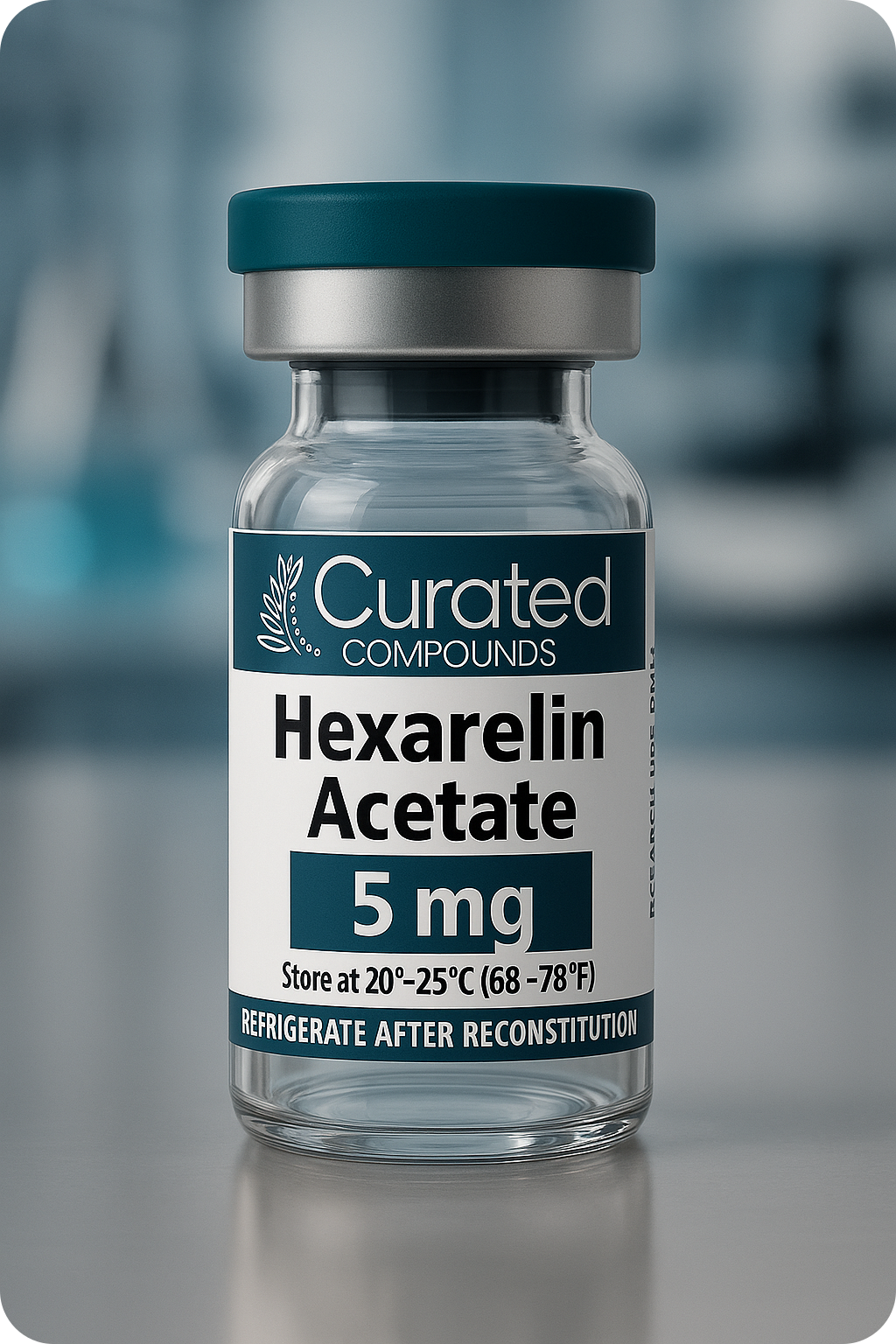
- Category: Growth Hormone Secretagogues
- Purity: 99.4%
- Format: Vial
- SKU: 261
Description
Product: Hexarelin Acetate (5mg) Product Overview: Hexarelin Acetate is a synthetic hexapeptide belonging to the class of growth hormone secretagogues (GHS). Composed of six amino acids, it has been studied for its ability to mimic certain biological activities of endogenous ghrelin, a hormone involved in growth hormone regulation. Hexarelin Acetate has been investigated for its potential to interact with specific GHS receptors and influence endocrine functions in preclinical research models. Research Profile: Hexarelin Acetate has been studied in laboratory settings to explore its role in growth hormone regulation and other physiological processes. Research has focused on its receptor-mediated activity, signaling pathways, and potential systemic effects. Key research areas include: - Growth Hormone Regulation: Investigated for its ability to stimulate growth hormone secretion via interaction with the growth hormone secretagogue receptor (GHS-R1a) in preclinical models. - Cardiovascular Research: Studied for potential effects on cardiac tissue and vasculature through pathways associated with ghrelin receptor signaling in animal models. - Metabolic Studies: Examined for its potential influence on glucose metabolism and insulin sensitivity in research settings. - Cellular Protection Mechanisms: Investigated in preclinical models for potential effects on apoptotic processes and oxidative stress responses in various cell types. - Endocrine System Dynamics: Studied for its interactions with hypothalamic-pituitary-adrenal (HPA) axis components in laboratory evaluations. Key Research Applications: Hexarelin Acetate has been utilized in preclinical research models to study its effects on biological systems. Applications include: - Endocrine Function Exploration: Research models investigating the peptide's ability to enhance growth hormone secretion and its downstream effects. - Cardiovascular Studies: Laboratory evaluations exploring its potential influence on myocardial cells and cardiovascular markers in preclinical settings. - Metabolic Research: Investigations into its role in modulating insulin signaling and glucose homeostasis in research models. - Cellular Stress Response: Research focusing on its potential to influence oxidative damage and apoptotic processes in cellular environments. Specifications: Peptide Content: 5 mg per vial Appearance: Lyophilized powder
Research Summary
Researched for its GH secretagogue properties and potential interactions with cardiovascular and metabolic signaling pathways.
Browse more Growth Hormone Secretagogues