Tesamorelin (10mg)
By TidesVI
$150.00 USD — In Stock
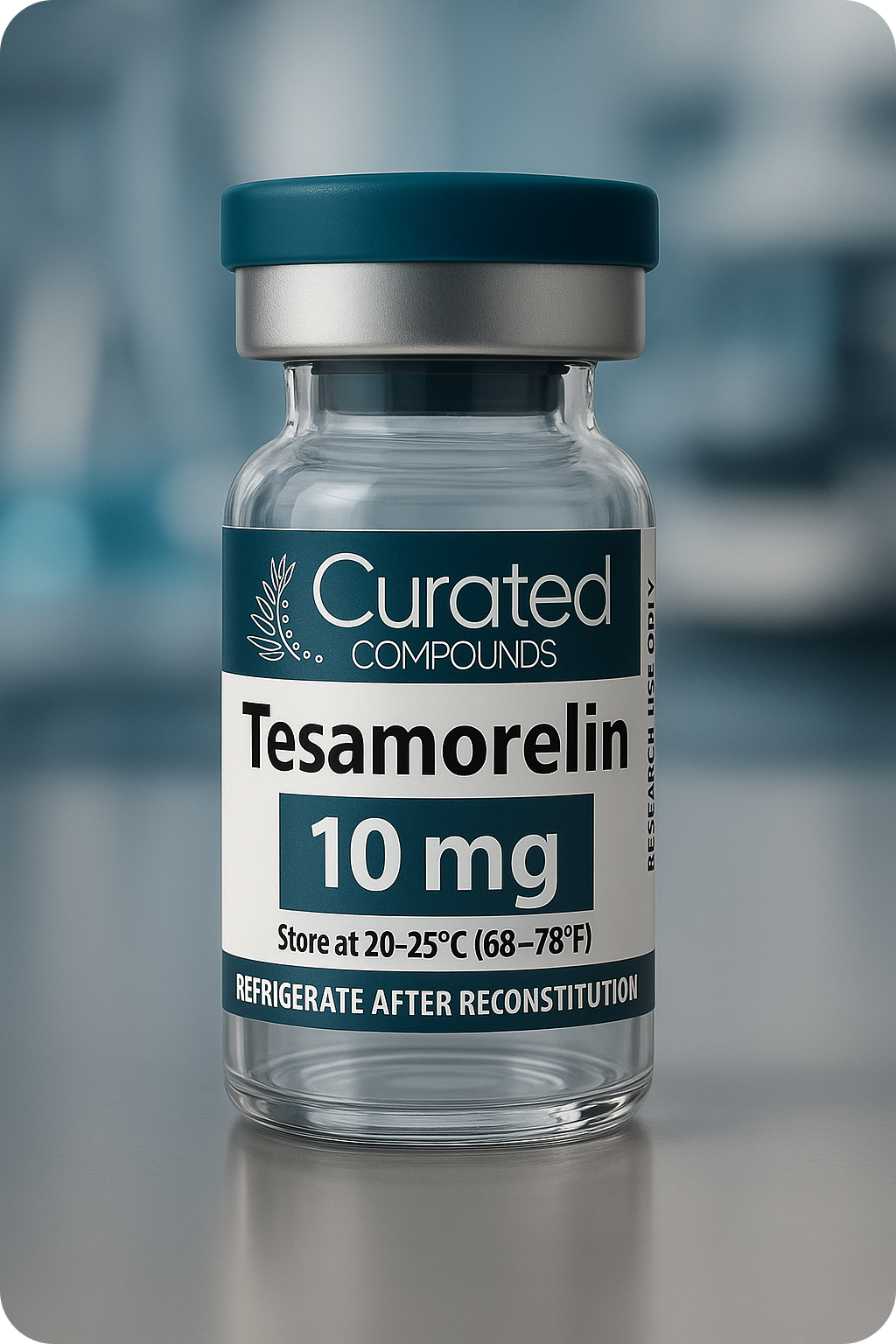
- Category: Growth Hormone Secretagogues
- Purity: 99.2%
- Format: Vial
- SKU: 279
Description
Product Overview: Tesamorelin is a synthetic peptide analog of growth hormone-releasing hormone (GHRH), featuring a modified 44-amino-acid sequence designed to mimic endogenous GHRH activity. A trans-3-hexenoic acid group is incorporated at the N-terminal, which enhances the peptide’s stability and bioactivity in laboratory settings. Its significance in research lies in its ability to stimulate the release of growth hormone, making it a valuable tool for investigations into metabolic and endocrine processes. Research Profile: Tesamorelin has been studied extensively for its interactions with the pituitary gland and its role in growth hormone regulation. Research focuses on its ability to bind and activate GHRH receptors, which are integral to growth hormone secretion and subsequent downstream effects. - Pituitary GHRH receptors: Tesamorelin has been investigated for its affinity to GHRH receptors, stimulating intracellular signaling cascades such as cAMP-mediated pathways to promote growth hormone release. - Metabolic pathways: Studies explore its impact on lipid metabolism, particularly its influence on adipocyte activity and fat distribution in research models. - IGF-1 regulation: Research evaluates Tesamorelin’s role in modulating insulin-like growth factor 1 (IGF-1) levels, a critical mediator of growth hormone’s anabolic effects in tissues. - Neuroendocrine signaling: Investigations assess how Tesamorelin influences hypothalamic-pituitary axis feedback loops, providing insights into endocrine system dynamics. - Protein synthesis: Laboratory evaluations delve into its effects on protein metabolism and synthesis, particularly in relation to muscle tissue growth and maintenance. Key Research Applications: Tesamorelin is utilized in diverse research models to explore its biological activity and potential applications in metabolic and endocrine studies. - Adipose tissue studies: Investigated for its effects on fat distribution and lipid metabolism in laboratory settings. - Skeletal muscle growth: Studied in research models focusing on protein synthesis and muscle tissue maintenance pathways. - IGF-1 modulation: Explored for its role in regulating IGF-1 levels and its downstream impacts on cellular growth and repair mechanisms. - Endocrine system research: Evaluated in studies examining the hypothalamic-pituitary axis and growth hormone dynamics. Specifications: Peptide Content: 10mg per vial Appearance: Lyophilized powder Storage & Handling: Store in a cool, dry environment protected from light and moisture. Reconstitution and handling should be performed using standard laboratory procedures and appropriate laboratory controls.
Research Summary
Studied for its potential effects on growth hormone signaling and metabolic regulation pathways.