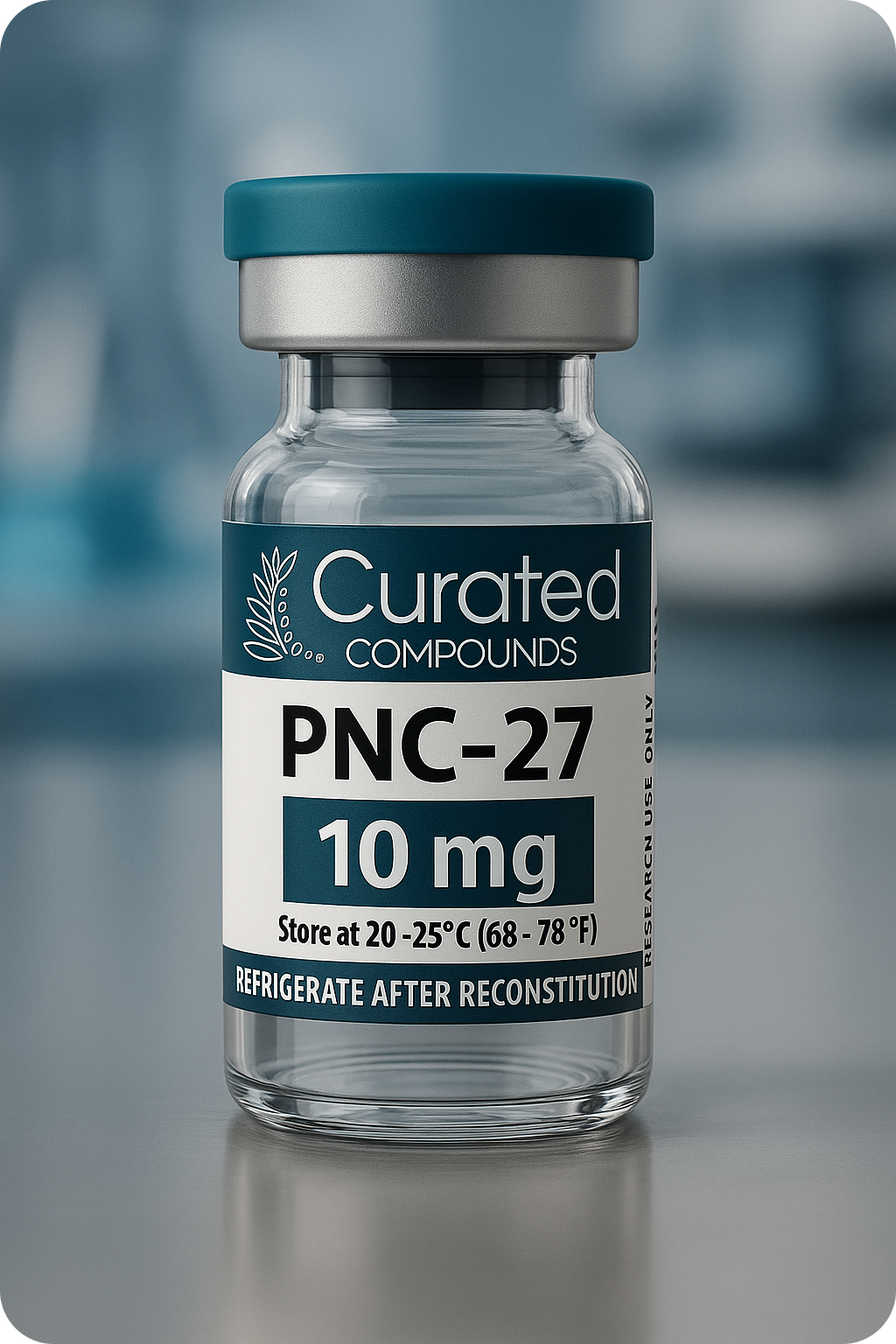
PNC-27 (10mg)
By TidesVI
$220.00 USD — In Stock
- Category: Telomere & Cell Signaling Peptides
- Purity: 99.9%
- Format: Vial
- SKU: 275
Description
Product: PNC-27 (10mg) Product Overview: PNC-27 is a synthetic peptide derived from the MDM-2 binding domain of the p53 tumor suppressor protein. It features an amphipathic helix structure that enables interactions with cellular membrane components, and has been the subject of preclinical research investigating its biochemical properties and membrane-associated activities. The peptide is designed to mimic a specific structural motif of p53, providing a research tool for studying p53-MDM-2 interactions and peptide-membrane dynamics. Research Profile: PNC-27 has been explored in preclinical investigations to assess its biochemical, structural, and cellular properties. - Protein-protein interactions: Studied for its capacity to mimic p53's alpha-helical binding interface with MDM-2, a key E3 ubiquitin ligase involved in p53 proteasomal degradation, using co-immunoprecipitation and competitive binding assays. - Membrane localization: Examined for its association with cell membrane components, potentially mediated by its amphipathic helix structure enabling insertion into lipid bilayers, studied via fluorescence microscopy and membrane fractionation techniques. - Selective membrane interactions: Investigated for its differential binding to membranes with distinct lipid compositions, including variations in cholesterol content and phospholipid asymmetry, using liposome leakage assays and calcein release experiments. - Peptide-mediated cytotoxicity: Explored in cell culture models for concentration-dependent effects on membrane integrity and cellular viability, assessed through LDH release, MTT assays, and flow cytometry. - Structural characterization: Analyzed using circular dichroism spectroscopy and molecular dynamics simulations to characterize its alpha-helical conformation in aqueous and membrane-mimetic environments. - MDM-2 pathway modulation: Investigated for its effects on MDM-2-mediated ubiquitination of p53 in cell-free reconstitution systems and transfected cell lines. Key Research Applications: PNC-27 has been utilized in early-stage research to study its structural and biochemical properties. - Biochemical studies: Investigated for its binding to MDM-2 and its implications for p53-related ubiquitin-proteasome pathways. - Membrane biophysics: Used in model membrane systems (liposomes, supported lipid bilayers) to study peptide-membrane interactions and pore formation mechanisms. - Cell culture models: Evaluated for its effects on cellular morphology and membrane integrity in controlled laboratory settings. - Peptide engineering: Employed as a structural template for designing modified amphipathic peptides with altered membrane selectivity profiles. - p53 pathway research: Applied as a tool compound for studying p53 stabilization and MDM-2 inhibition in oncology research models. Specifications: Peptide Content: 10mg per vial Appearance: Lyophilized powder
Research Summary
A synthetic peptide derived from the HDM-2 binding domain of the p53 tumor suppressor protein, studied for its interactions with cellular membrane signaling in transformed cells.
Browse more Telomere & Cell Signaling Peptides